
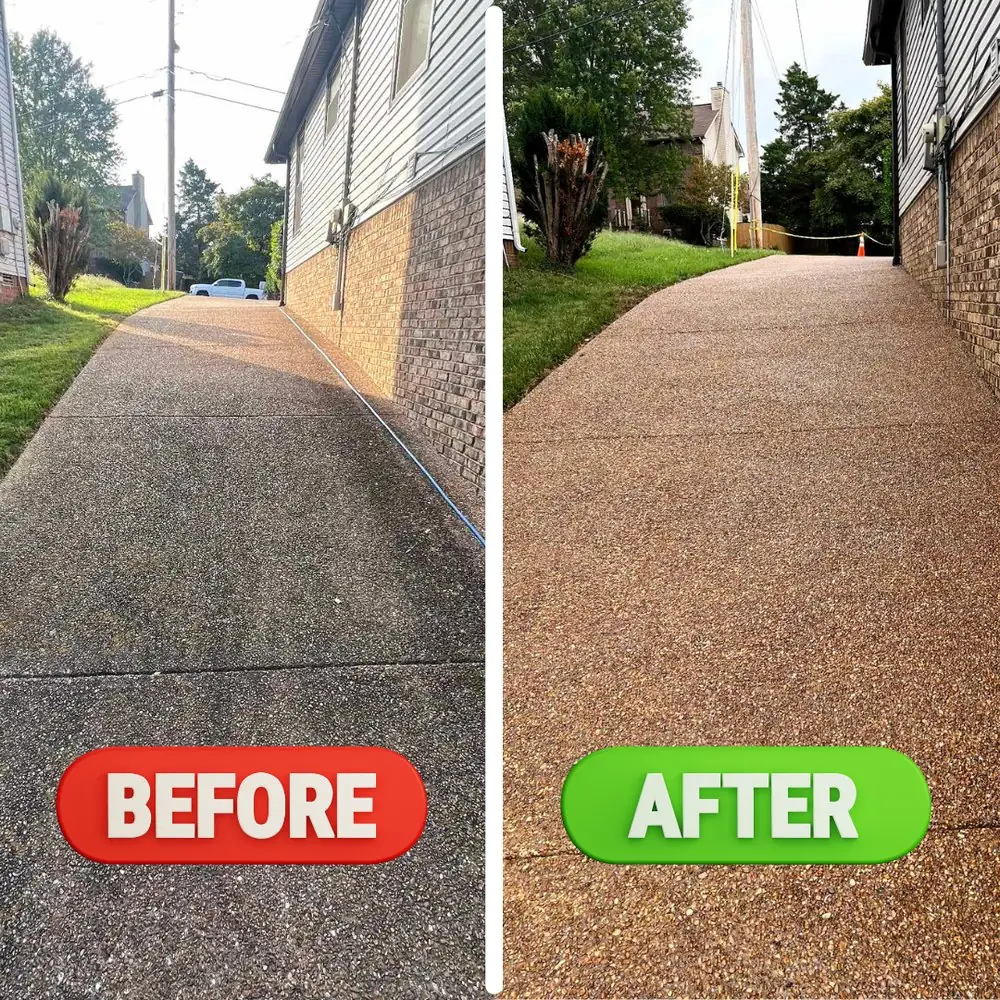
Paver sealing gets oversold, so let's be honest about what it does and doesn't do.
What sealing actually does
- Locks the joint sand in place so ants, weeds, and pressure washing don't wash it out. This is the single biggest reason to seal.
- Blocks staining from oil, grease, leaf tannins, and grill drips.
- Slows fading from UV exposure.
- Reduces freeze-thaw damage by keeping water out of the paver body — which matters in our January swings.
- Deepens the color, if you choose a wet-look or color-enhancing sealer.
What it doesn't do
Sealer will not fix settling, level a wavy patio, or hide efflorescence that hasn't been properly cleaned off first. It also isn't permanent — anyone promising a one-and-done seal is selling something.
How long it lasts here
In Middle Tennessee's sun and humidity, expect 3-5 years from a quality solvent-based sealer on a driveway, and closer to 5 years on a shaded patio. Water-based sealers land at the shorter end of that range.
Prep is 80% of the job
Sealing over dirty pavers permanently traps the dirt. A proper job means deep cleaning, killing organic growth, letting the pavers fully dry, re-sanding the joints with polymeric sand, and only then sealing. Skipping any of those steps is why some sealed patios look cloudy or blotchy a year later.
When to skip it
If your pavers are brand new, wait 60-90 days for efflorescence to work its way out. If the patio is failing structurally, fix the base first — sealer over a sinking patio is money wasted.
Want a straight assessment of your hardscape? See our paver and natural stone sealing page or request a free quote.